
Do your investigations tell you what you need to know?
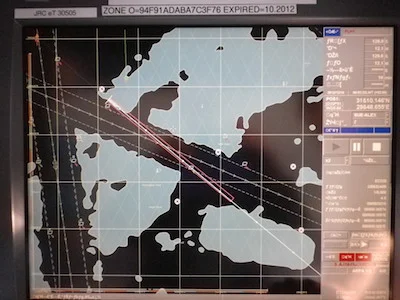
Suddenly the buoy was on the other port side and the land moved towards the ship...
Having investigated occurrences such as deaths in enclosed spaces, collisions, allisions, fires, groundings or water ingress, to name but a few, I can provide you with a competent, unbiased and independent service. My years as an MCA examiner for mates and masters were very helpful in this context as they have also taught me to ask the right questions at the right moment in time.
What I can do for you depends on what you need. For a flag State I can provide investigation assistance in accordance with the IMO Casualty Investigation Code.
If you are an owner I can carry out an investigation as required by the ISM Code - see also compliance. I can provide you with an unbiased and independent service which the IMO Casualty Investigation Code recommends.
If you are an insurer or P&I Club I can help you identify what you need to know to deal with a claim.
The IMO Casualty Investigation Code recommends an unbiased and independent approach for flag State investigations and it would appear to be of a similar advantage for an internal company inquiry if safety investigations are taken serious.
Statutory obligations
SOLAS makes parts I and II of the IMO Casualty Investigation Code mandatory. Flag States therefore must investigate marine casualties which have occurred directly in connection with the operations of a ship.
In addition, the ISM Code requires the company ensures that non-conformities, accidents and hazardous situations are reported to the company, investigated and analysed. The relevant IMO guidelines (Annex to MSC-MEPC.7/Circ.5) stipulate that all personnel should have the qualifications, training and experience that may be required in support of the SMS. This will, for rather obvious reasons, include the investigation of incidents and accidents.
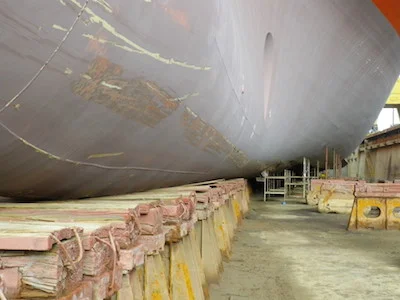
...resulting in some scratches,...
Whereas the Casualty Investigation Code focuses on the flag State the ISM Code addresses ship and company. The former also gives the flag State more leeway and some discretion as to what to investigate.
The company does not have the same choice. It is actually well advised to obtain as many details as is possible on accidents and hazardous situations. For the evidence of having done that is auditable during the next ISM audit and the analysis of occurrences can significantly contribute to running a safer operation.
Being able to investigate and analyse requires detailed and comprehensive reporting - see also compliance.
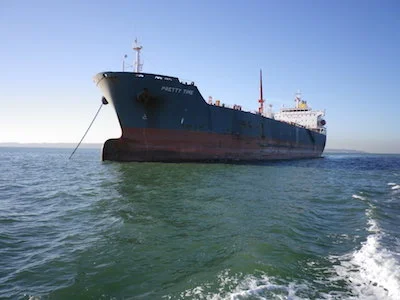
£ 95,000 later the price of vegetable oil in the water and on the beach was established, though
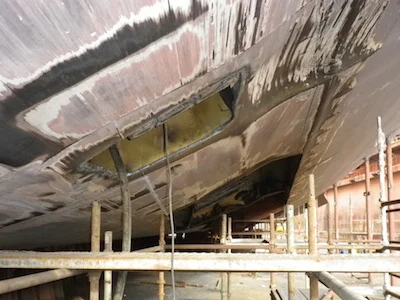
...and...ok, some holes...and an extended dry docking period
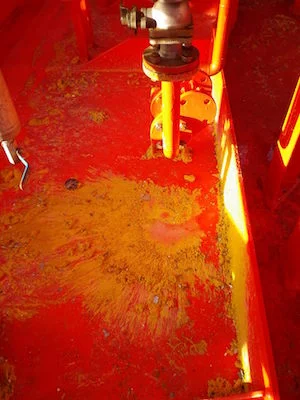
But, your honour, it was only vegetable oil...
Reporting
Correct reporting and independent and truthful investigations do not only identify errors and areas for improvement. They will also, when all else fails, help to keep the penalty or fine down.
Regulatory, nautical and technical competency are pre-conditions for successful investigations. However, it will hardly be possible to identify important causal factors without an understanding of how seafarers of various different national and cultural backgrounds think, act and communicate. Relevant training and experiences seem therefore to be essential.